Donald Preston–Stacey Lowry partnership
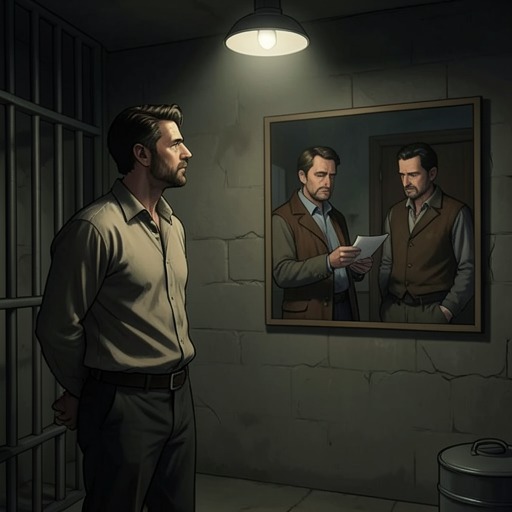
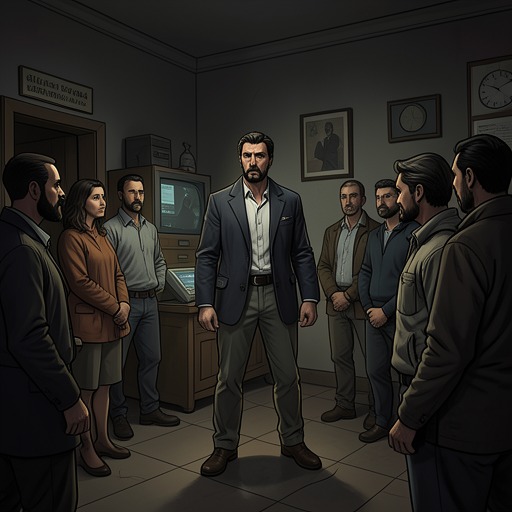
The RoomDonald Preston and Stacey Lowry’s partnership is portrayed as a sustained effort to expose police brutality and force public action. In the protagonist’s imagined meeting with them, his letter becomes the springboard for a broad campaign: Lowry would speak, Preston would use his newspaper, and both would help turn a private account of abuse into pressure for a legislative investigation. The scene gives the protagonist influential allies, while its eventual identification as a scene he has mentally reviewed makes the promised alliance part of his fantasy rather than a confirmed outcome.
Background and Shared Analysis
The imagined conversation presents the partnership as predating the protagonist’s arrival in their plans. Lowry says that he and Preston have been combating police brutality, or at least attempting to, for years. Their concern is not limited to individual misconduct: they reject the popular explanation that brutality is simply the autonomous excess of a few overzealous or corrupt officers. Instead, they describe it as the expression of a larger structure of authority, whose underlying causes and likely consequences the public has failed to recognize.
Preston’s contribution is described as intermittent editorial advocacy. He has tried to alert readers to the danger through editorials, while Lowry has lectured on the subject. Both characterize their earlier efforts as appeals that have largely gone unheard. Their shared diagnosis thus joins a critique of policing to a problem of public understanding: exposing isolated acts is insufficient if the system that enables them remains unseen.
The Protagonist as a Catalyst
In the meeting as imagined, Preston and Lowry say that they had discussed the need for action and, after reading the protagonist’s letter, identified him as the person they had been looking for. They propose using his experience as the campaign’s foreground and its practical starting point. The relationship is therefore not presented as a partnership between equals in public role: the protagonist supplies the arrest and detention account that can make the issue vivid, while Preston and Lowry supply established platforms and organizing capacity.
The protagonist welcomes the offer as the rapid realization of a hope he had already entertained. His satisfaction depends on the men’s backing: he imagines that their influence will let him answer those he believes have wronged him. The scene gives his personal grievance a political vocabulary and a route toward public exposure, but it also shows how closely the proposed crusade is bound to his desire for vindication.
Campaign and Political Strategy
The plan assigns the partners complementary tasks. Lowry is to address professional, civic, and other willing groups; Preston is to sustain a daily campaign in the paper. They would also reopen old files, drawing on statements, letters, depositions, photographs, and rumors to stir public attention and press for a legislative investigation. Their stated intention to use every available tool, even devious ones, makes the campaign’s tactics deliberately expansive rather than confined to formal argument.
The imagined strategy extends beyond lectures and editorials. Preston describes television, mass-circulation magazines, interviews, personal appearances, and pamphlets as possible means of reaching the public. The reasoning behind this breadth is political: although officials may resist surrendering authority, the partners believe they will respond to constituents’ reactions because they want to remain in office. Public opinion is cast not merely as an audience for the campaign but as the pressure capable of compelling legislative action.
Narrative Status and Significance
The partnership’s persuasive detail is also part of its narrative uncertainty. After the meeting and its dialogue, the protagonist closes his eyes and reviews the scenes, finding nothing to revise; he takes comfort in the imagined men’s support and in the prospect of shaking his opponents. That framing qualifies the apparent visit and the campaign commitments: the text establishes them as a gratifying vision, not as verified events or completed political work.
As a relationship in that vision, Preston and Lowry embody the institutional allies the protagonist believes can transform confinement into influence. Their established advocacy supplies credibility, their coordinated methods promise reach, and their proposed investigation offers a public consequence. Yet the gap between the campaign’s confident design and its uncertain reality preserves the scene’s central tension: the alliance seems to make his private account powerful, while remaining dependent on a fantasy whose outcome the narrative does not confirm.